DuckDuckGo, a US-based browser known for privacy-focused browsers, added a new feature on July 8, 2026, to block YouTube video ads. This move serves as a countermeasure against the backdrop of user dissatisfaction with YouTube Premium’s price hikes and Google’s forced AI features.
- “YouTube Ad Blocking Feature” to be announced in July 2026
- Utilizing the open-source technology ‘uBlock Origin’
- Combined with “Duck Player” to enhance privacy protection
- YouTube Premium price hikes and dissatisfaction with AI adoption are tailwinds
- YouTube’s Tightening Regulations and Server-Side Battles
- Future developments and highlights of ad blocking culture
“YouTube Ad Blocking Feature” to be announced in July 2026
On July 8, 2026, US company DuckDuckGo announced that it has officially added a new feature in its web browser to block most video ads, including YouTube. This feature automatically removes ads inserted before or during video playback, allowing users to watch YouTube content without interruption.
On its official blog, the company emphasizes the discomfort of being interrupted by ads mid-video and strongly promotes the offer of a free ad-free viewing environment. This feature is available early for specific platforms and is already enabled by default on the DuckDuckGo browser on iOS, Windows, and Mac.
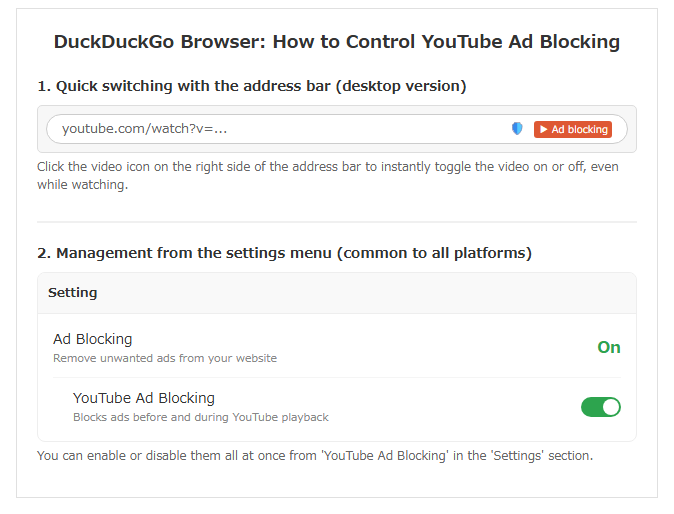
For the Android version, the default activation is currently planned for the near future, but you can manually use it by turning on YouTube Ad Blocking in the settings menu. Desktop users can easily toggle features on or off by simply clicking the video icon in the address bar, even while watching.
Utilizing the open-source technology ‘uBlock Origin’
The technical basis for the newly implemented ad blocking feature is a community-driven filter list provided by uBlock Origin, a prominent open-source ad blocker. In addition to this filter, DuckDuckGo applies its own rules to improve compatibility with websites and reduce display distortion.
However, as with typical ad blockers, the official mention is that buffering times during video loading may be longer than usual and there is a risk of unexpected malfunctions. Also, note that this feature is intended for viewing within the DuckDuckGo browser and does not work on the default YouTube app operating on the OS.
The diagram below shows how to control the ad-blocking feature from the browser’s settings screen.
If the YouTube app is set to open by default when clicking a link to YouTube on a mobile device, you may need to change the settings to continue watching in your browser. Still, YouTube’s core features such as saving viewing history and syncing playlists are not compromised, and the goal is to provide users with an experience that removes only ads.
Combined with “Duck Player” to enhance privacy protection
The DuckDuckGo browser also comes with its own video player, Duck Player, which can be used alongside ad-blocking features. Duck Player is a feature that plays YouTube videos in theater mode without unnecessary visual elements, strongly protecting users from tracking cookies and personalized ads.
A particularly notable feature is that it prevents the content you watch through this player from being reflected in YouTube’s recommended video algorithm. This allows you to enjoy videos purely while maintaining privacy.
DuckDuckGo regularly collects anonymous user feedback, demonstrating its commitment to continuously refining new features. This approach, which maintains the existing YouTube experience while adding privacy protection, offers users added value beyond mere ad removal.
Challenges to Major Platforms and Future Market Outlook
YouTube Premium price hikes and dissatisfaction with AI adoption are tailwinds
This new feature addition came at a strategic time, just one month after YouTube Premium, YouTube’s official subscription service, raised prices in June 2026. DuckDuckGo emphasizes that it can block ads even in free browsers, aiming to serve as a platform for users facing increased costs.
Additionally, some users have voiced backlash against Google’s mandatory introduction of new features such as AI Overviews, which displays AI-generated summaries in search results. According to DuckDuckGo, since Google’s AI-related announcement in May 2026, downloads of its apps in the US have increased by an average of 18.1 percent per week, with peaks reaching 33 percent.
The increase in installs on the iOS version is particularly remarkable, reaching its peak on May 25, 2026, a 69.9% increase compared to the previous week. Users are also flocking to AI-powered search pages like noai.duckduckgo.com to turn off AI features, and the growing customer base seeking privacy and a simple user experience is supporting DuckDuckGo’s growth.
YouTube’s Tightening Regulations and Server-Side Battles
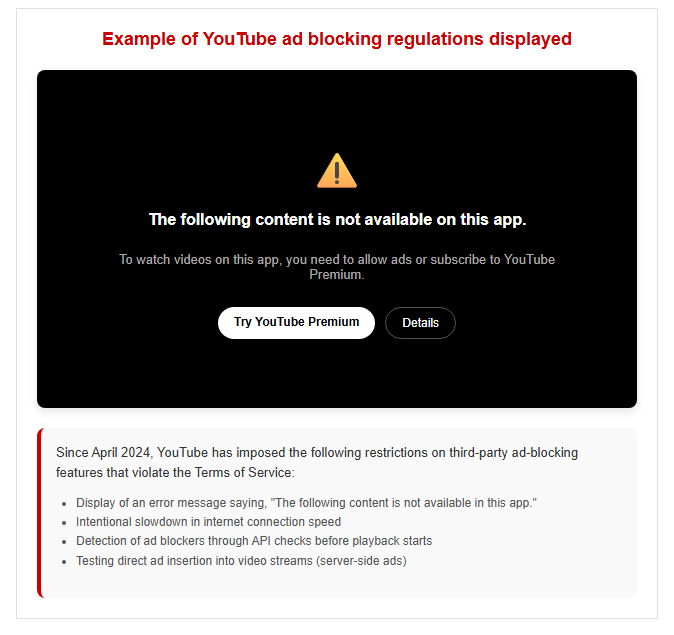
Meanwhile, YouTube is tightening its regulations on ad blocking year by year. In April 2024, the company announced crackdowns on third-party apps citing terms of service violations, imposing restrictions on users using blocking tools such as error messages like “The following content is not available in this app” and reduced connection speeds.
As a technical countermeasure, YouTube reportedly began testing a method to insert ads directly into video streams on the server side rather than the client side around June 2024. Once this method is fully implemented, traditional metadata-based ad blockers may stop working, and cat and mouse will move to a more advanced stage.
The diagram below shows an example of YouTube’s warning screen for an ad-blocking app.
Furthermore, long-term lawsuits over the legality of ad blockers continue in German courts, with publishers arguing under copyright law that “changing website code constitutes infringement of alteration rights,” raising legal risks. The conflict between platforms seeking to protect advertisers’ revenue and users seeking a comfortable viewing experience is intensifying both technically and legally.
Future developments and highlights of ad blocking culture
The future focus will be on how widespread the server-side ad insertion YouTube is testing will be, and what workarounds developers like DuckDuckGo and uBlock Origin will take in response. YouTube is increasingly encouraging forced viewing to increase paid plan subscription rates, but this involves trade-offs that harm the user experience.
In contrast to TikTok, which rapidly grew with short-form videos and successfully monetized by adopting a UI that makes it easier for users to skip ads, YouTube is trying to maintain its traditional forced viewing model. In such a market environment, the focus is on how long free and privacy-focused options like DuckDuckGo’s can continue to gain user support.
Furthermore, if a legal decision in Europe is finalized, it could affect the overall state of browser extensions, making it important to watch not only technical measures but also legal developments. We are at a major turning point in the years to come, where the balance between users’ free choice and the platform’s sustainable revenue model will land.
[#DuckDuckGo #YouTube広告ブロック #プライバシー保護 #ITニュース #Google対抗 #ウェブブラウザ #YouTubePremium #ネット広告]


コメント