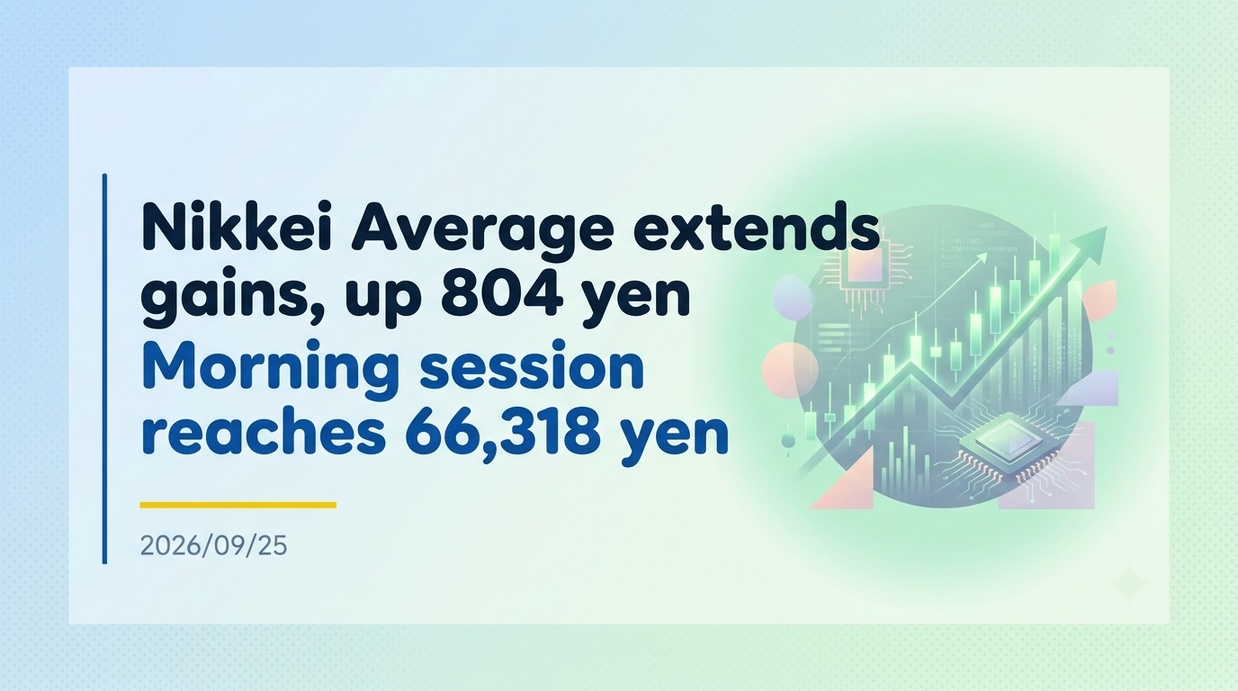
On the morning of September 25, 2026, the Nikkei 225 Stock Average extended its rally for a fifth consecutive day, surging 804.15 yen to close the morning session at 66,318.14 yen. This sharp advance was propelled by strong buying in semiconductor stocks following resilient tech trading on Wall Street, alongside easing concerns over high oil prices after reports surfaced of talks to reopen the Strait of Hormuz.
- Market Overview: Nikkei Extends Rally for Fifth Day with an 804-Yen Gain to 66,318
- Semiconductor and Banking Stocks Lead Selective Buying Wave
- Monetary Tightening and Shift in Rate Environment Following BOJ Meeting
- Crude Oil Price Shifts and Relief Over Easing Geopolitical Risks
- Structural Support from TSE Reforms and Earnings Outperformance
- Key Catalysts Ahead: Dividend Ex-Dates and Breaking Above the 75-Day Moving Average
Market Overview: Nikkei Extends Rally for Fifth Day with an 804-Yen Gain to 66,318
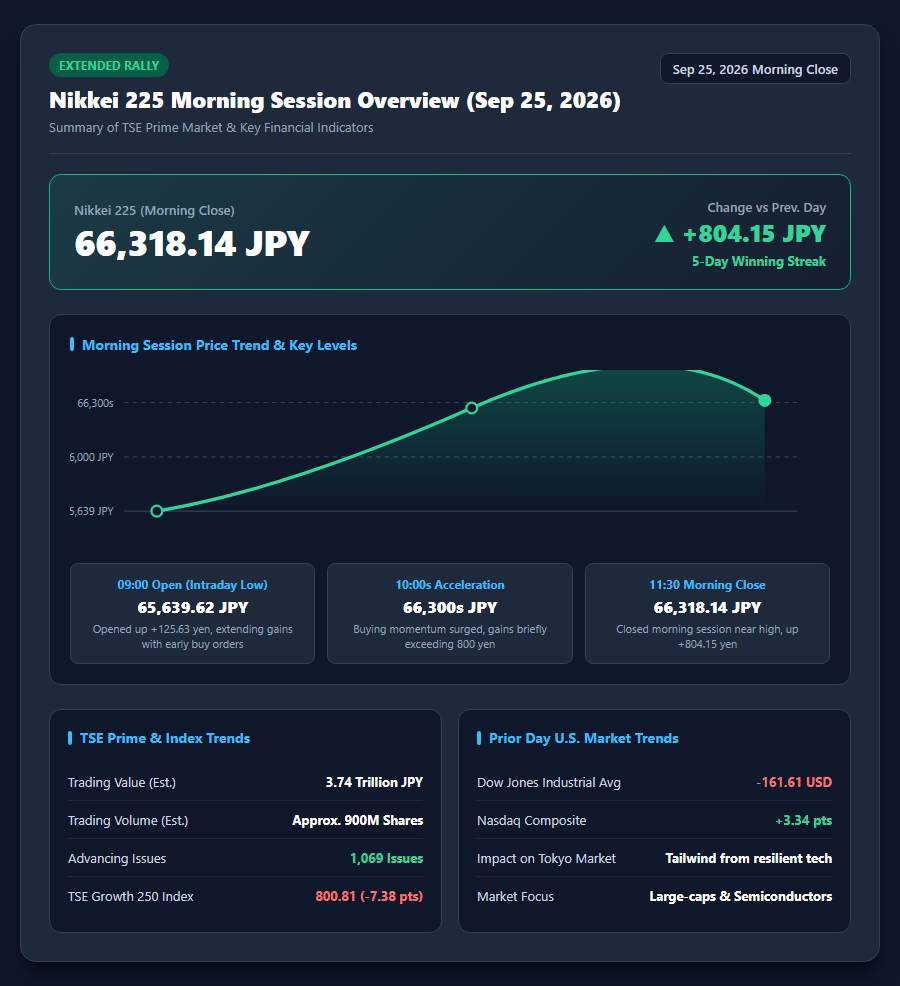
During the morning session on September 25, 2026, the Nikkei 225 Stock Average jumped 804.15 yen from the previous day’s close to end the morning at 66,318.14 yen, marking a robust five-day winning streak. In the U.S. market the prior day, while the Dow Jones Industrial Average dropped 161.61 points, the Nasdaq Composite managed a modest gain of 3.34 points, demonstrating underlying resilience in tech. Tokyo opened higher by 125.63 yen at 65,639.62 yen, which marked the intraday low as buying interest steadily built from the opening bell. Momentum accelerated sharply during the 10 a.m. hour, sending the index up by more than 800 yen to breach the 66,300 level. Trading value on the TSE Prime Market reached an estimated 3.74 trillion yen on volume of approximately 900 million shares. Across the broader market, advancing issues totaled 1,069, whereas the Growth 250 Index for emerging companies dropped 7.38 points to 800.81, underscoring a rally heavily dominated by large-cap stocks. Among individual stocks, Kobayashi Pharmaceutical saw a surge of buy orders that left it glutted at the upper price limit without opening, fueled by speculation surrounding a potential going-private transaction. Please refer to the overview chart below.
Semiconductor and Banking Stocks Lead Selective Buying Wave
The morning advance was driven predominantly by semiconductor and electronic components manufacturers, alongside major financial institutions. Tailwinds from the Nasdaq’s resilience and diminishing geopolitical anxieties sparked broad-based buying across semiconductor and AI infrastructure plays, including Tokyo Electron, Advantest, Ibiden, Kioxia Holdings, and Lasertec. Meanwhile, against the backdrop of rising long-term interest rates in both Japan and the U.S., financial sectors such as banking, securities, and commodity futures posted solid gains on expectations of expanding net interest margins. Out of 33 industry sub-indexes on the Tokyo Stock Exchange, 30 advanced, making it an almost market-wide rally; only Information & Communication, Construction, and Fishery, Agriculture & Forestry closed lower. On the downside, SoftBank Group plummeted as its UK subsidiary Arm Holdings fell in U.S. trading, exerting a drag on the Nikkei index as a single mega-cap component. In addition, investor sentiment showed caution toward high-debt corporations due to fears of rising interest expenses amid surging long-term yields, highlighting a widening performance gap among index constituents.
Macroeconomic Drivers: Interest Rates and Crude Oil Dynamics
Monetary Tightening and Shift in Rate Environment Following BOJ Meeting
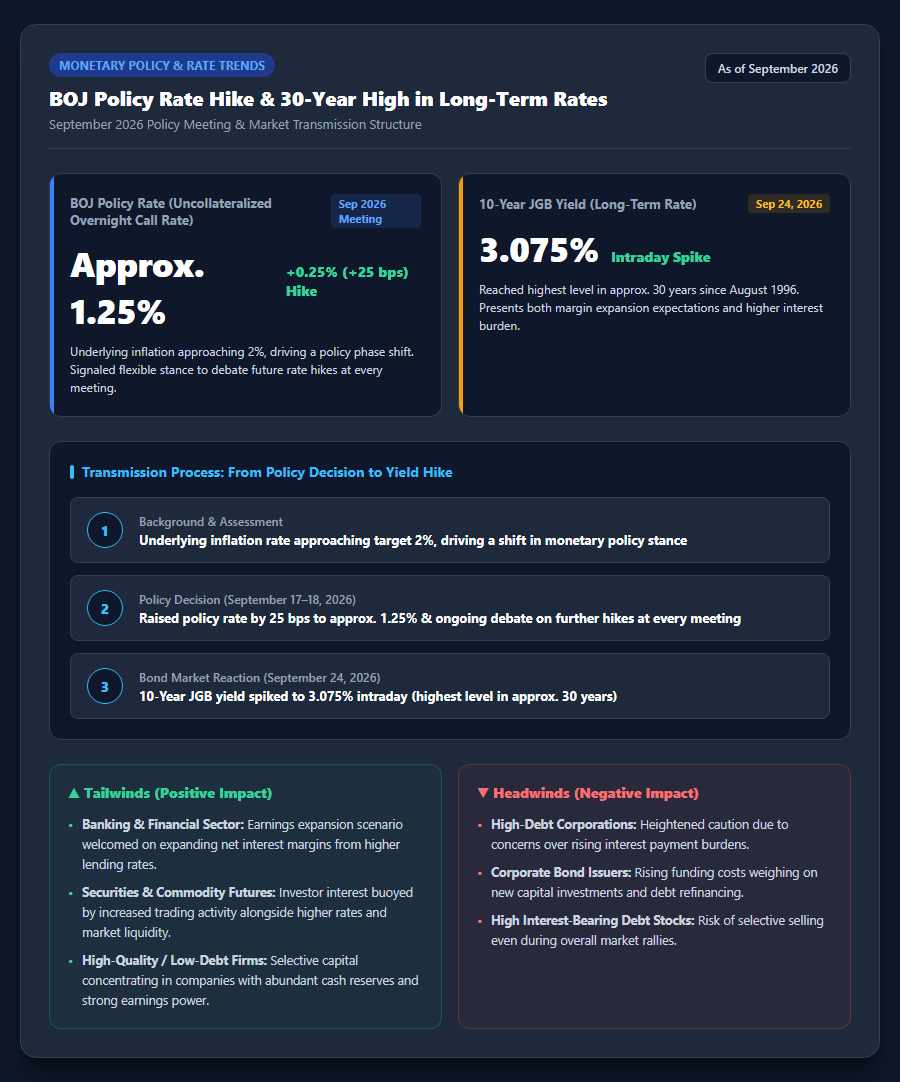
A complex interplay of monetary policy decisions and long-term yield trends forms the core backdrop of this stock market rally. At its monetary policy meeting on September 17–18, 2026, the Bank of Japan decided to raise its uncollateralized overnight call rate by 25 basis points to approximately 1.25%. In his post-meeting press conference, BOJ Governor Kazuo Ueda noted that “underlying inflation is approaching 2%, marking a fundamental shift in the policy phase,” signaling a flexible stance where additional rate hikes will be deliberated at every upcoming meeting. In response, Japan’s 10-year government bond yield spiked to 3.075% on September 24, 2026, touching its highest level in roughly 30 years since August 1996. While rising yields were welcomed as an opportunity for banks to boost net interest margins, they simultaneously presented headwinds for companies heavily reliant on corporate bond issuance and bank loans. The delicate balance between corporate earnings strength and interest rate pressures has become the primary catalyst filtering stock selection in the market. Please refer to the policy rate trend diagram below.
Crude Oil Price Shifts and Relief Over Easing Geopolitical Risks
Crucial changes are also emerging regarding crude oil prices and geopolitical risks, which had previously weighed on market sentiment. Escalating tensions in the Middle East had previously pushed WTI crude futures above \$96 per barrel and driven refined products like diesel to record high prices, stoking fears of prolonged global inflation. However, market anxiety over spiking energy costs eased dramatically following reports that the U.S. administration under President Trump and Iran were seeking an agreement to avoid military conflict, including a phased reopening of the Strait of Hormuz. Capping energy costs has relieved Japanese manufacturers and transportation firms of acute cost pressures, providing crucial support for equities. The temporary abatement of simultaneous global monetary tightening risks triggered a risk-on shift among market participants, directly fueling the morning’s sharp gains.
Corporate Fundamentals and Future Market Outlook
Structural Support from TSE Reforms and Earnings Outperformance
When the Nikkei 225 temporarily reached the historic 70,000 mark during intraday trading in June 2026, the rally was rooted in “enhanced corporate profitability”—a fundamental distinction from the speculative asset bubble of 1989. Net profits for March-fiscal-year companies on the TSE Prime Market jumped 65% year-on-year for the April–June 2026 quarter, with full-year forecasts continuing to skew upward. Driven by the Tokyo Stock Exchange’s initiative urging “management conscious of capital cost and stock price,” over 90% of Prime-listed companies have implemented enhanced shareholder return measures, including share buybacks and dividend increases. Spearheaded by semiconductor enterprises capturing surging AI and data center demand, earnings per share (EPS) growth remains robust, preventing valuation multiples (PER) from becoming overextended. Sustained capital inflows from foreign investors who applaud Japan’s structural governance reforms further demonstrate the underlying strength of Japanese equities.
Key Catalysts Ahead: Dividend Ex-Dates and Breaking Above the 75-Day Moving Average
Looking ahead, the primary focus for the Tokyo stock market will be whether the index can consolidate at current elevated levels and break through key technical hurdles. During the afternoon session, the Nikkei 225 is expected to test downside firmness while consolidating near its morning highs. Institutional and retail demand seeking interim dividend rights ahead of the September 28 ex-dividend date for March-closing firms is providing a strong floor for the market. From a technical perspective, a decisive breakout and consolidation above the 75-day moving average—currently situated near 66,000 yen—will be the key determinant for sustaining this bullish trend. While remaining watchful of external uncertainties such as the U.S.-China summit, crude oil trends, and U.S.-Japan yield spreads, selective investment into companies with solid earnings backing and strong pricing power is anticipated to keep leading the market upward.
Reference Pages
- [2026 Geopolitical Risk Outlook | PwC Japan Group] https://www.pwc.com/jp/ja/knowledge/thoughtleadership/geopolitical-risk2026.html
【#Nikkei225 #JapaneseStocks #SemiconductorStocks #MonetaryPolicy #LongTermRates #StockMarket】
コメント