The Trump administration is considering economic deals with Russia ahead of a potential end to the war in Ukraine. The strategy aims to secure an early ceasefire by combining economic incentives with intense sanction threats.
- Key Elements of the U.S.–Russia Economic Pact and Strategic Motives
- Escalating Sanction Pressures and Secondary Tariff Warnings
- Rare Earth and Energy Agreements with Ukraine
- Coordination with Europe and NATO Amid Security Challenges
- Spillovers into Crude Oil, Diesel Prices, and Financial Markets
- Key Diplomatic Timelines and Future Outlook
Key Elements of the U.S.–Russia Economic Pact and Strategic Motives
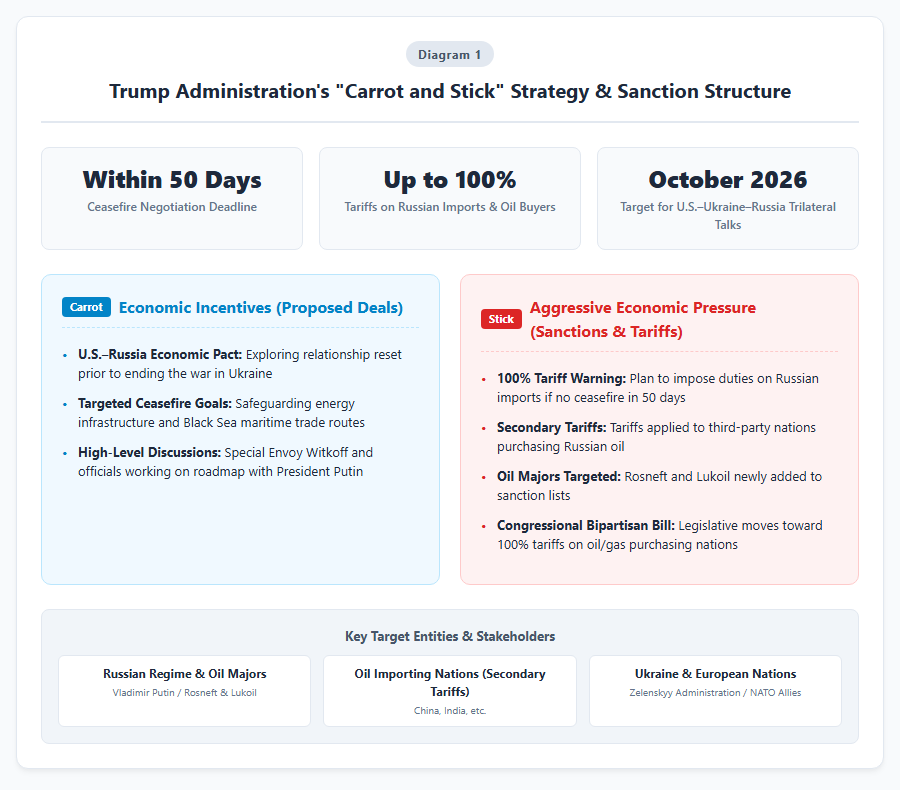
Reports indicate that the Trump administration is seeking a new economic agreement with Russia prior to the end of hostilities in Ukraine. White House strategists are pivoting from traditional sanction-heavy policies by offering Moscow economic incentives, aiming to reset U.S.–Russia relations and jumpstart negotiations. Specifically, the administration is targeting limited ceasefire agreements centered on safeguarding energy infrastructure and Black Sea trade routes, with potential trilateral talks among the United States, Ukraine, and Russia slated for as early as October 2026. U.S. Special Envoy Steve Witkoff and other officials have held substantive discussions with Russian President Vladimir Putin to draft a roadmap toward peace. However, these efforts face stiff resistance in the U.S. Congress, where strong bipartisan support exists for legislation imposing tariffs of up to 100% on countries purchasing Russian crude oil and natural gas. This creates friction between the White House’s diplomatic overtures and Capitol Hill’s hawkish stance, leaving the reconciliation of economic interests a critical hurdle. Please refer to the following diagram:
Escalating Sanction Pressures and Secondary Tariff Warnings
While dangling economic incentives, President Trump is simultaneously applying fierce sanction pressure on Moscow. Trump declared that if Russia fails to reach a ceasefire agreement with Ukraine within 50 days, Washington will impose additional economic sanctions. According to Reuters, White House officials expect tariffs of roughly 100% on imports from Russia. Furthermore, the administration plans to introduce secondary tariffs targeting third nations—such as China and India—that continue importing Russian oil, aiming to sever Moscow’s primary war fund and foreign currency revenue stream. The U.S. government has already designated Russia’s largest oil majors, Rosneft and Lukoil, under new sanctions, sending shockwaves through international financial markets and European energy supply chains. This “carrot-and-stick” approach seeks to negotiate peace while threatening catastrophic economic fallout if Moscow refuses to comply.
Multilateral Diplomacy: Ukrainian Support and Critical Resource Rights
Rare Earth and Energy Agreements with Ukraine
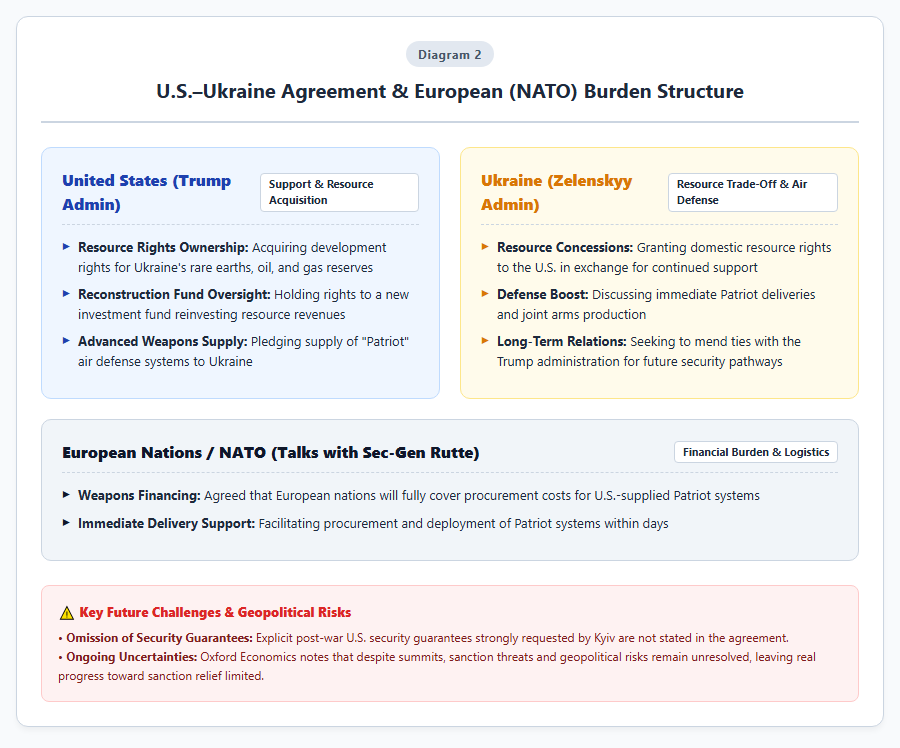
The Trump administration’s diplomatic strategy extends beyond Russia, materializing into major economic transactions with Ukraine as well. President Trump is scheduled to host President Volodymyr Zelenskyy at the White House to sign an agreement securing U.S. development rights to Ukraine’s mineral and energy reserves—including rare earth elements, oil, and natural gas—in exchange for continued U.S. military and economic support. According to the Financial Times, the deal establishes a new investment fund into which revenues from resource exploitation will flow to rebuild and develop Ukraine, with the U.S. retaining ownership rights over the fund. In Kyiv, Special Envoy Keith Kellogg met directly with Zelenskyy to discuss concrete steps, including boosting air defense, joint arms production, and tightening sanctions against Russia. Ukraine hopes this pact will mend and strengthen ties with the Trump White House, paving the way for long-term security cooperation.
Coordination with Europe and NATO Amid Security Challenges
A major caveat of the U.S.–Ukraine resource pact is its omission of explicit, legally binding U.S. security guarantees for post-war Ukraine—a key demand from Kyiv. Nonetheless, Washington has pledged immediate military support, including advanced surface-to-air Patriot missile systems. Following talks with NATO Secretary General Mark Rutte, an agreement was reached wherein European nations, rather than the U.S., will fund the procurement of these defense systems, with deliveries expected within days. Analysts at Oxford Economics caution that despite these summits, geopolitical uncertainties and sanction threats remain unresolved, leaving real progress toward sanction relief or broader economic cooperation limited. Complex multilateral negotiations continue over European burden-sharing and long-term security framework assurances. Please refer to the following diagram:
Global Markets, Energy Sectors, and Geopolitical Outlook
Spillovers into Crude Oil, Diesel Prices, and Financial Markets
The Trump administration’s oil sanctions on Russia and heightened Middle Eastern tensions are rippling across global energy trading and financial markets. Escalating sanctions against Russian crude and fears over energy infrastructure safety have driven up prices for oil products, particularly diesel. Rising diesel costs are inflating global logistics and manufacturing expenses, reigniting U.S. inflation concerns. With U.S. 10-year Treasury yields hovering near the critical 5% threshold, equity indices such as the S&P 500 face persistent downward pressure. Should upcoming U.S.–China summit meetings de-escalate Middle East tensions and ease supply anxieties, energy prices could retreat, lowering yields and sparking a risk-on rally in stock markets. Nevertheless, market participants maintain a cautious posture given sticky inflation and sustained high interest rates.
Key Diplomatic Timelines and Future Outlook
The market’s focus over the coming months will center on several pivotal diplomatic and economic milestones. First, the September 28, 2026 White House summit between President Trump and President Zelenskyy—and the anticipated signing of the rare earth agreement—will serve as a crucial barometer for U.S.–Ukraine relations. Next, all eyes will be on Moscow’s response to Trump’s 50-day ceasefire ultimatum, and whether Washington triggers secondary tariffs or 100% import duties. Furthermore, potential trilateral talks among the U.S., Ukraine, and Russia in October 2026 could determine whether a partial ceasefire securing energy infrastructure and Black Sea maritime routes can be realized. Business leaders and investors must closely monitor oil price volatility and shifting international sanctions to proactively navigate these geopolitical risks.
Reference Pages
- 【The New York Times】https://www.nytimes.com/2026/09/17/us/trump-putin-russia-sanctions.html
【#TrumpAdministration #RussianEconomy #UkraineCrisis #OilMarkets #GeopoliticalRisk】

コメント